Welcoming Wonderful Indonesia
Author: DESMA Center, Wiwik Mahdayani
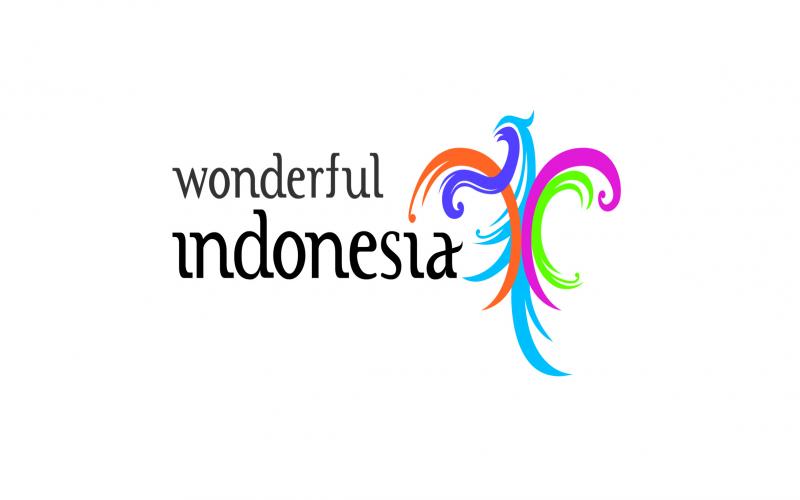
Minister of Culture and Tourism Jero Wacik has introduced and promoted the new slogan "Wonderful Indonesia" as part of the target of 7.7 million foreign tourists to visit Indonesia in 2011. The slogan uses the same logo as the "Visit Indonesia" slogan, which is a modern form of the Garuda bird in the form of 5 stripes with 5 colours. The five stripes symbolise the five precepts of Pancasila, while the five colours represent Indonesia's diverse cultures and its diversity. The "Wonderful Indonesia" logo uses a typeface inspired by Indonesian art. The lithe and flexible letterforms are inspired by Indonesian carving and batik art that has been modernised to keep it easy to read. "Wonderful Indonesia" means that Indonesia is beautiful in many ways: Wonderful People, Wonderful Culture, Wonderful Natural Beauty, Wonderful Natural Resources, and Wonderful Investment Opportunities (KemenBudPar, 2010).
A beautiful slogan alone is not enough if it is not matched by a vision of achieving common goals, as well as cooperation and coordination to realise strategies and implement attractive programmes to bring in foreign tourists. Indonesia itself faces ups and downs in terms of foreign tourist arrivals. In 2005, Indonesia received 5,002,101 foreign tourists, then dropped to 4,871,351 visitors in 2006 due to the Bali II bombing as one of the implications. Little by little, Indonesian tourism showed an increase in 2007, 2008 and 2009 with 5,505,759; 6,234,497 and 6,323,730 foreign tourist arrivals (BPS, 2010).
Indonesia's position
Let's look at Indonesia's position on the tourism map in Southeast Asia (among ASEAN member countries), before Indonesia positions itself on the map of Asia, and then the world. The ASEAN Secretariat released international visitation data for its 10 member countries, placing Indonesia as number 4 in terms of foreign tourist arrivals. When Asia was hit by the economic crisis in 1998, the four countries, Malaysia, Thailand, Singapore and Indonesia departed at not so different visitation figures. Malaysia with 5.5 million; Thailand with 7.7 million; Singapore with 6.2 million and Indonesia with 4.6 million (Tourism Malaysia, Tourism Authority Thailand, Singapore Tourism Board, BPS, 2010).
In 2009, there was an increase in 3 countries, Malaysia by receiving 23,646,191 foreign tourists followed by Thailand with 14,091,000 and Singapore with 9,681,300 foreign tourists (ASEAN Sec, 2010). Interestingly, 77% of the tourists visiting Malaysia came from ASEAN member countries. In the same year, Tourism Malaysia recorded 12,733,082 tourist arrivals from Singapore. In fact, the Singapore Department of Statistics released census data through its press conference on 31 August 2010 that the population of Singapore as of June 2010 was 5.08 million. This means that an average of more than 1 million visitors from Singapore go to Malaysia every month. This number could have come from international workers who reside in Singapore. Tourism Malaysia also recorded 2,405,360 tourists from Indonesia as the second highest number of visitors to the country (Tourism Malaysia, 2010).
Indonesia is also a major market for Singapore tourism. The Research & Statistic Section of the Singapore Tourism Board reported that from 2005 to 2009, Indonesia was the number one market for Singapore with 1,745,000 Indonesian tourists visiting Singapore. Thailand is also not to be outdone in capturing the Indonesian traveller market. Thailand, which receives more than 71% of foreign tourists from non-ASEAN countries, has put Indonesia as one of its target markets. The Tourism Authority of Thailand (TAT) states that Indonesian travellers to Thailand have increased. In the period January - September 2010, 205,890 visitors from Indonesia came to Thailand. This number increased by 37.85 per cent compared to the same period in the previous year. This target is strengthened by the launch of AirAsia's new low-cost carrier routes Medan-Bangkok and Surabaya-Bangkok. This adds to the Medan-Phuket, Jakarta-Bangkok and Denpasar-Bangkok routes already served by Garuda Indonesia, Thai Airways International, Indonesia AirAsia and Thai AirAsia. TAT is even preparing to open a special representative office in Indonesia in 2011 to serve the Indonesian market, which is currently still done by its representative office in Singapore.
For the Indonesian tourism market, Singapore and Malaysia are the biggest visitors to Indonesia. Visitors from Singapore totalled 1,272,862 in 2009, this is a decline compared to the number of tourists from Malaysia which continued to increase until it reached 1,179,366 in 2009. Tourists from Thailand who visit Indonesia are also still far behind in terms of numbers, but have experienced an increase in the level of visits since 2002, peaking in 2009, with 109,547 visitors.
Indonesia answers the challenge
Tourism has challenges from the external and internal sides as an industry, the external side of tourism as a multi-sector industry is certainly very vulnerable to issues that have become classic problems in tourism development in Indonesia such as security and infrastructure. Terrorism and natural disasters are still part of Indonesia's image, especially those that do not recognise the geographical conditions of the country. While the internal side, as a large archipelago, Indonesia also faces accessibility challenges such as transport, inadequate roads, difficult and distant access resulting in more expensive travel costs. Indonesian tourism still suffers from other classic problems such as parties who do not have integration and coordination. Public and private parties are still running independently, especially in terms of promotion. Not to mention at the provincial and district levels in many regions that are still experiencing capacity problems in managing and promoting as well as determining the priority scale of tourism development in their regions. If a region does not determine tourism as one of the focuses of development, of course this is natural because not all regions have tourism potential. Human resources at the provincial and district levels sometimes still do not position their potential and tend to be ambitious in determining strategies and steps to develop tourism in their regions. Tourism products in the regions have actually developed, only still need to be packaged and executed as a saleable tourism product and experience promotional integration. In terms of products, now is not the time for Indonesia to talk about tourism potential that is still unclear about its existence and economic value. Tourism destinations in Indonesia already exist and are formed.
Security and infrastructure are two things that fall outside the realm of tourism. Of course it takes a process and cooperation to improve the image and build infrastructure that requires a lot of money to build an archipelago-shaped Indonesia. But instead of continuing to make security and infrastructure as scapegoats that are still in process, Indonesian tourism needs to respond quickly and measured according to the existing situation and conditions.
Indonesia needs to maximise its major cities as starting points for visitors' trips. Bangkok, Kuala Lumpur, and of course Singapore, have become the main starting points for travelling in the 3 countries. In terms of infrastructure and facilities, these cities are ready to serve and provide services to visitors. While Indonesia, with such a vast territory, still relies on Bali as a starting point. Jakarta itself is not yet a favourite as a starting point city for travellers. Indonesia at least needs to maximise at least 4 cities, namely Jakarta, Medan, Surabaya and Denpasar as starting points to then distribute the spread of visitors to various selected tourist destinations. These cities are needed because they have the infrastructure and facilities to support tourism, and are able to channel visitors to various areas that can be served by flights, land and sea transport. As an illustration, Thailand uses Bangkok and Pattaya as conventional starting points for "new visitors" to the country. Phuket and Chiang Mai, meanwhile, are targeted as destinations for repeaters. Of course, this is not absolute, but visits will be focussed on these destinations.
Medan, which is close to the "markets" of Malaysia, Singapore and Thailand, will be an important gateway to serve destinations in Sumatra and Java. Jakarta will be an important gateway for destinations in Java, Sumatra and elsewhere. Surabaya and Denpasar will be able to serve connections to various tourist destinations in Eastern Indonesia.
Destination Management Organization (DMO) that has been promoted by the Directorate General of Tourism Destination Development (DPD), Ministry of Culture and Tourism in 2010, must be revived and functioned in its proper form. DMO which according to the book "Guidelines for the Establishment of Destination Management Organization (DMO) Development" published by DPD (2010) is defined as a structured and synergistic tourism destination governance that includes the functions of coordination, planning, implementation, and control of the destination organisation innovatively and systemically through the use of networking, information and technology, which is led in an integrated manner with the participation of the community, actors / associations, industry, academia, and government that has goals, processes, and common interests in order to improve the quality of management, the volume of tourist visits, length of stay and the amount of tourist spending and benefits for local communities.
From this definition, tourism destination governance is the key word that the DMO in question is slightly different from what has been outlined by UNWTO (UN agency in the field of tourism). In simple terms, DMO is actually a tourism board or promotion agency. However, in response to the dynamic development of tourism, technology and information, the function of the tourism board today is certainly more complex than just promoting tourist destinations. The Tourism Board is now required to play a more active role in terms of selecting superior tourism products that are worth selling to be promoted, playing an active role in developing human resources in the field of promotion, using research results to connect markets with tourism products, and providing awards for industries that excel and are creative in providing quality services and services. Considering the many interests and characteristics of tourism businesses in Indonesia, the form of the tourism board should be a partnership between the public and private sectors. The process will work so that these functions and roles do not overlap with tourism offices at the regional and national levels.
In addition, Law No.10 of 2009 on Tourism mandates in Chapter X article 36 onwards the establishment of the Indonesian Tourism Promotion Board domiciled in the national capital. With the task of improving the image of Indonesian tourism; increasing foreign tourist visits and foreign exchange earnings; increasing domestic tourist visits and spending; raising funding from sources other than the State Revenue and Expenditure Budget and the Regional Revenue and Expenditure Budget in accordance with statutory provisions; and conducting research in the context of developing tourism businesses and businesses. The law also states that this promotion agency has a function as a coordinator of tourism promotion carried out by the business world at the centre and regions; and a working partner of the Government and Regional Governments. Furthermore, the Law also mandates the establishment of a Regional Tourism Promotion Agency domiciled in the provincial and regency/city capitals.
Long before the term DMO was introduced by UNWTO, Malaysia, Thailand and Singapore had already stolen the start by forming the promotional agencies Malaysia Tourism Board or known as Tourism Malaysia, Tourism Authority of Thailand and Singapore Tourism Board. These three agencies not only have attractive programmes, but also websites that integrate all superior tourism products in one website in line with promotional taglines such as Malaysia Truly Asia, Amazing Thailand, and YourSingapore. Indonesia itself also has an Indonesia.travel website to coordinate all tourist destinations and related businesses. However, since it has just been launched, it is still not functioning optimally and the navigation function on the website still feels "heavy".
Maximising the ASEAN market, whose member countries are located in one region that is relatively easy to reach from Indonesia, is worth considering. The ASEAN market is also relatively more "immune" to non-tourism issues and has a culture that is not too different, making travelling easier. Indonesia is not only targeting the conventional market but also repeater visitors to maximise top tourist destinations. Singapore, Malaysia, Thailand, and even the Philippines have huge potential as markets for Indonesia. For example, France, the number one most visited country in the world with 76.8 million visitors, gets the most contribution from neighbouring countries such as the UK, Belgium, Luxemburg and Germany (Chiffres clés du tourisme, 2010).
The government should have the courage to select a superior tourist destination. Indonesia is very beautiful and has many places worth visiting, but not all areas can be promoted at once. Focus and priority should be given to destinations that are ready with services, services, and of course attractions that are ready to be visited. For this reason, it is necessary to prioritise the promotion of tourist destinations. We will not know the extent to which it is ready until we get a "test" from many and long visits.
Go forward Indonesia Tourism!!!