DESMA Center Discussed Strategy with the Ministry of Tourism in Strengthening Tourism Business Standardization and Certification: Strategic Steps to Improve Industrial Competitiveness

Author: Dani Fauzi, Program Officer
The tourism industry is one of the sectors that drives economic growth, creates jobs and increases national competitiveness. However, the success of this industry does not only depend on promotion and development of destinations. The foundation of service quality which is supported by business standards that are adaptive and relevant to the dynamics of the tourism industry is a key factor in creating a competitive tourism ecosystem.
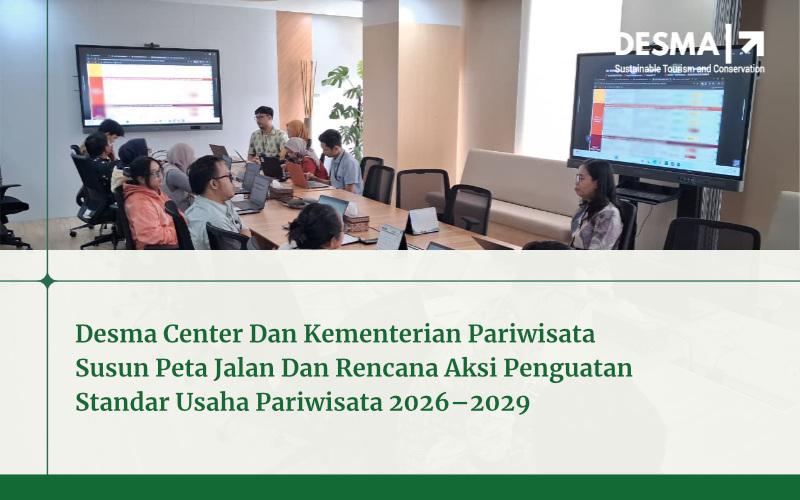
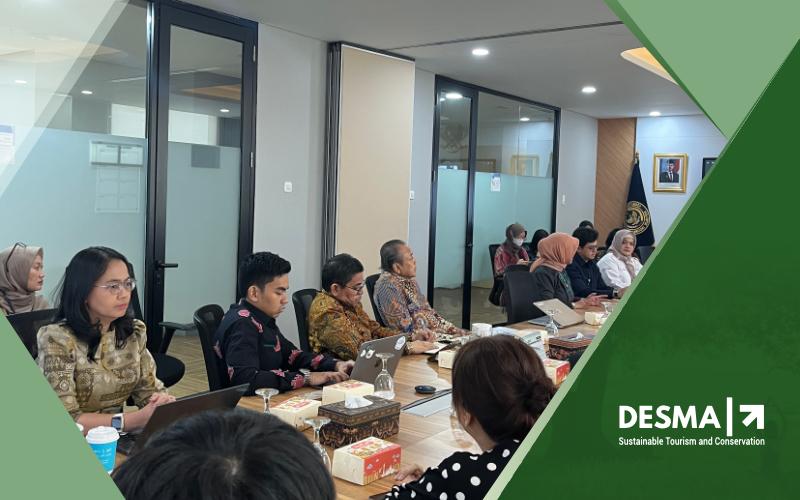
DESMA Center together with the Ministry of Tourism (Kemenpar) conducted a strategic discussion on March 21 2025 at the Ministry of Tourism, Jakarta. This meeting aims to discuss strategies for harmonizing regulations, standardization policies and tourism business certification to ensure that the standards implemented provide answers to industry challenges more effectively.
The discussion focused on the importance of policy harmonization for standardization and certification of sustainable tourism businesses, especially harmonization between central and regional governments therefore the implementation of regulations will run more optimal. Currently, differences in standards and policy implementation mechanisms often become obstacles for tourism businesses in fulfilling certification requirements.
In the discussion, the DESMA Center emphasized that standardization and certification of tourism businesses is not only normative in the nature of implementation, but must be an instrument that:
-
Improving the quality of services and professionalism of tourism sector businesses
-
Building consumer and visitors confidence, both domestic and foreign
-
Opening wider market access, including expansion to regional and global levels
-
Encouraging more inclusive and sustainable business practices
To ensure that standardization and certification of tourism businesses can be properly adopted by all stakeholders, a more implementable and inclusive approach is needed. The standards applied must take into account the diversity of characteristics of tourism businesses, from micro businesses to large companies, and ensure that the certification process does not become a bureaucratic obstacle for business actors and becomes a quality control for tourism businesses.
Appropriate standardization will be a catalyst for increasing the competitiveness of the Indonesian tourism industry. This meeting was the first step in developing a more concrete and sustainable framework between the two parties to support the implementation of more adaptive and relevant business standards. This is intended to the Indonesian tourism industry to continue to grow in a sustainable, inclusive and competitive manner.